The global industrial landscape is undergoing a profound paradigm shift driven by stringent environmental mandates and a collective corporate push toward sustainable operations. At the heart of this transformation is the modernization of air pollution control infrastructures across heavy manufacturing sectors. For decades, particulate matter mitigation was treated as a secondary operational requirement—a localized compliance box to be checked. Today, industrial air purification has evolved into a highly sophisticated, multi-disciplinary engineering discipline, reshaping how raw material processors, metal refiners, and chemical manufacturers design their production ecosystems.
As manufacturing facilities face unprecedented pressure to reduce fugitive emissions, the demand for comprehensive, turnkey engineering solutions has surpassed the need for standalone machinery. Modern heavy industry dust suppression solutions now require a holistic approach that synchronizes dust collection with gas cooling, desulfurization, and volatile organic compound mitigation.
The Structural Transition to Integrated Engineering
Historically, procurement managers in heavy industries sourced individual environmental components from fragmented vendors. A facility might purchase a fabric filter from one supplier, a ventilation duct network from another, and an execution contract from a local general contractor. This fragmented approach frequently resulted in systemic inefficiencies, balancing mismatches, and ambiguous maintenance responsibilities.
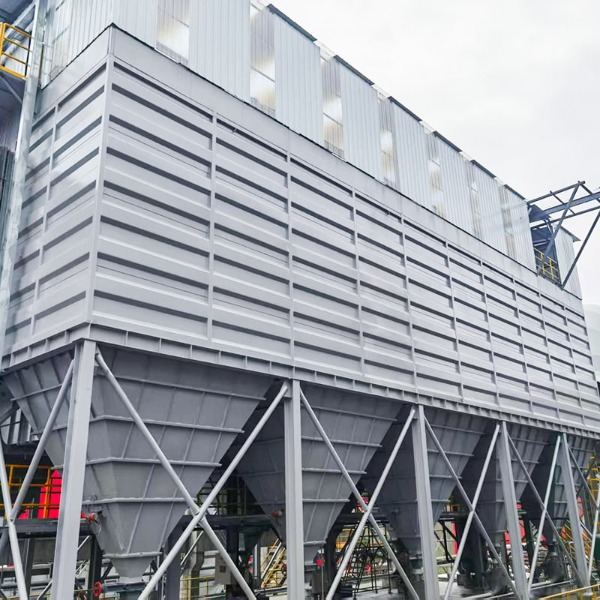
The contemporary market has decisively moved away from component-based sourcing toward engineering, procurement, and construction (EPC) frameworks. Heavy industries now prioritize an integrated dust control system that operates as a cohesive unit. Developing custom dust collection system design requires a deep understanding of fluid dynamics, thermodynamics, and material science to ensure that capture hoods, ductwork, and structural filtration units function in perfect equilibrium.
This structural transition is particularly evident in high-temperature, high-dust environments where particulate characteristics fluctuate rapidly. In these complex settings, standardized, off-the-shelf equipment consistently fails to meet long-term operational goals. Advanced industrial dust control system engineering relies on precise computational fluid dynamics (CFD) modeling to predict dust behavior at every stage of the production line, ensuring optimal face velocity at the hoods and preventing material settling within the ducting network.
Cross-Industry Applications and Unique Operational Challenges
The application of advanced air purification technology is not uniform; different sectors present distinct chemical and physical challenges that necessitate highly specialized engineering approaches. For instance, the pyrometallurgical processes involved in metal refining generate fine, abrasive, and often hazardous fumes, whereas the processing of minerals yields high-volume, ambient-temperature coarse dust.
Severe Thermal and Mechanical Environments
In heavy industrial manufacturing, the processing of raw materials involves extreme thermal gradients and aggressive mechanical handling. Transporting, blending, and processing raw ores or minerals releases vast quantities of fine particulates into the workplace atmosphere. Engineering an effective dust control system for heavy industry requires addressing these severe environments with specialized materials and robust structural designs.
Filtration systems operating downstream from high-temperature furnaces must withstand severe thermal shock and potential spark carryover. Consequently, modern engineering schemes incorporate advanced spark arrestors, gas conditioning towers to modulate temperature, and specialized filter media capable of maintaining structural integrity above two hundred degrees Celsius.
Sensitive Chemical and Precision Manufacturing
Conversely, sectors like precision manufacturing and pharmaceuticals demand an entirely different technological focus. In these environments, the primary focus has shifted from mere volumetric capacity to absolute containment, the prevention of cross-contamination, and safety compliance. Particulates generated during chemical synthesis or pharmaceutical formulation are often highly potent or combustible.
For these sensitive applications, a pharmaceutical dust collection system design must prioritize clean-in-place capabilities, high-efficiency particulate air (HEPA) secondary filtration, and explosion-proof containment features. The engineering focus shifts toward continuous negative pressure zones that prevent any trace of airborne contamination from escaping the primary processing enclosure.
| Industry Sector |
Primary Dust Characteristics |
Critical Engineering Requirement |
Supplementary System Integration |
| Primary Metal Refining |
Ultrafine, abrasive, high-temperature, metallic fumes |
Spark arrest, gas conditioning, high-temperature fabric media |
Flue gas desulfurization and denitrification |
| Mineral Processing & Cement |
High volume, abrasive, hygroscopic, ambient temperature |
High-capacity baghouses, robust material discharge systems |
Mechanical suppression and moisture control |
| Chemical & Pharmaceutical |
Potent, hazardous, combustible, ultra-fine particulates |
Explosion-proof venting, HEPA filtration, total isolation |
Volatile organic compound (VOC) abatement |
| Foundry & Mechanical Casting |
Mixed silica sand, binders, thermal metal smoke |
High-velocity source capture hoods, variable air volume controls |
Phenolic resin odor and gas filtration |
Technical Integration: Merging Particulate and Gas Treatment
One of the most significant advancements in modern environmental engineering is the technical convergence of particulate collection with gas-phase pollution control. Heavy industrial emissions rarely consist of dry dust alone; process exhausts from sintering, pelletizing, and melting operations typically contain a complex cocktail of sulfur dioxide, nitrogen oxides, and volatile organic compounds alongside heavy particulate loads.
Faced with this complexity, modern environmental engineering firms are designing integrated systems where the dust control system acts as the foundational stage for multi-pollutant treatment. For example, in modern flue gas treatment lines, dry sorbent injection or semi-dry scrubbing systems introduce chemical reagents directly into the gas stream upstream of the fabric filter. The filter bags then serve a dual purpose: they capture the fine process dust while simultaneously hosting a reactive cake layer of sorbent material that neutralizes acid gases.
Furthermore, the mitigation of volatile organic compounds (VOCs) is increasingly being paired with particulate filtration. Fine particulates can foul the catalyst beds used in catalytic oxidizers or clog the ceramic media in regenerative thermal oxidizers (RTOs). By engineering a high-efficiency industrial dust extractor upstream, facilities protect downstream gas-treatment infrastructure, ensuring long-term operational stability and lowering overall maintenance costs.
Operational Sustainability and Energy Efficiency
As energy costs fluctuate and corporate sustainability mandates become more aggressive, the energy consumption of environmental control systems has come under intense scrutiny. Large-scale air purification networks require massive centrifugal fans powered by high-voltage motors to pull hundreds of thousands of cubic meters of air through dense filter media every hour. Unoptimized systems represent a significant continuous drain on a facility’s operational budget.
To combat this, contemporary system design integrates variable frequency drives (VFDs) paired with automated static pressure sensors throughout the duct network. When specific production lines are idle, automated dampers adjust, and the system throttles down the air volume, drastically reducing electrical consumption.
Additionally, the choice of pulse-jet cleaning mechanisms has evolved. Smart controllers now monitor the differential pressure across the filter elements, initiating the compressed air cleaning cycle only when the resistance reaches a precise threshold. This on-demand cleaning strategy extends the operational life of the filter media, reduces compressed air consumption, and maintains a stable negative pressure at the production source capture points.
Conclusion: The Path Forward for Industrial Operators
The field of industrial air quality management has permanently transitioned from basic equipment supply to highly sophisticated environmental systems engineering. For heavy industries, selecting the right approach to emission control is no longer just an exercise in regulatory compliance; it is a critical factor in determining operational uptime, workplace safety, and energy efficiency. As global emission standards continue to tighten over the coming years, the utilization of comprehensive, custom-engineered systems that seamlessly bridge the gap between particulate collection and gas treatment will remain the definitive standard for sustainable industrial progress.
Industry FAQ: Optimizing Industrial Air Quality
What are the main differences between dry and wet industrial dust suppression solutions?
Dry systems, primarily utilizing fabric filter baghouses or electrostatic precipitators, capture airborne dust by pulling air through physical media or applying electrical charges. They are ideal for recovering valuable dry materials and achieving high collection efficiencies with fine particulates. Wet systems, such as venture scrubbers, utilize liquid droplets to capture dust particles. Wet methods are generally preferred when handling highly combustible dusts, high-moisture gas streams, or when simultaneous gas absorption is required, though they generate a wastewater stream that requires subsequent treatment.
How does proper custom dust collection system design prevent dust explosions?
Combustible dust is a severe hazard in industries handling organic materials, synthetic chemicals, and certain metals. An engineered safety approach requires integrating explosion isolation valves, spark detection systems, and explosion venting panels designed according to strict international safety standards. Additionally, specifying antistatic filter media and ensuring complete electrical grounding of all ductwork prevents the accumulation of static charges that could act as an ignition source within the collector.
Why is computational fluid dynamics (CFD) important in industrial dust control system engineering?
CFD modeling allows environmental engineers to simulate air velocity, pressure drops, and particle trajectories inside hoods, duct networks, and filtration chambers before physical fabrication begins. This ensures uniform airflow distribution across the filter media, prevents high-velocity localized wear on the filter bags, and eliminates low-velocity zones within the ductwork where dust could settle and create blockages or fire hazards.
How can a facility integrate a dust control system with existing gas treatment infrastructures?
Integration requires a careful analysis of gas temperature, chemical composition, and volumetric flow rates. High-efficiency particulate removal is typically positioned as the first phase to protect downstream catalyst beds or thermal oxidation media from particulate fouling. If acid gas removal is required, dry sorbent injection systems can be engineered directly into the ductwork upstream of the dust collector, utilizing the filter bags to facilitate the necessary chemical contact time between the gas and the sorbent material.



 简体中文
简体中文